Making a will with support: the new testamentary capacity in Catalonia following Law 13/2026
The “Ley 13/2026, de 3 de agosto” —Law 13/2026 of 3 August— is a far-reaching reform of Book IV of the “Código Civil de Cataluña”, the Catalan Civil Code, on the law of succession, and is due to come into force on 4 February 2027. The reform turns on the redefinition of testamentary capacity around natural capacity at the time of execution, the adaptation of the notary's assessment of capacity to a support-based model and the specific regulation of wills made by persons with sensory disabilities. It forms part of the wider process of bringing Catalan civil law into line with the new paradigm of disability, centred on autonomy, support and accessibility, and it raises significant questions as to the distinction between natural capacity and legal capacity, the involvement of medical experts, subsequent challenges to the will, undue influence and notarial liability.
1.Natural capacity and legal capacity under the new Catalan rules
Under Law 13/2026 the notion of capacity to make a will shifts from the traditional reference to abstract legal capacity towards specific natural capacity at the time of execution. Legal capacity, understood as the general ability to hold rights and obligations and to exercise them, ceases to be the decisive criterion for the validity of a will. What now matters is natural capacity, that is, the person's ability to understand the meaning of the act of making a will, to assess the consequences of their dispositions and to express a free and conscious intention at the moment of signature.
This approach is in line with the support-based model set out in Spanish national disability legislation and in the consolidated text of the “Ley General de derechos de las personas con discapacidad y de su inclusión social”, the General Act on the rights of persons with disabilities and their social inclusion, which places the emphasis on autonomy, independent living, universal accessibility and reasonable adjustments. Natural capacity is conceived as a continuum rather than a rigid category, and it may be present even in persons who, as a matter of law, have been made subject to support or assistance measures. Law 13/2026 avoids any automatic equation between disability and incapacity to make a will, and requires an individual assessment of the person's situation at the time of execution.
2.The notary's assessment of capacity and the system of support
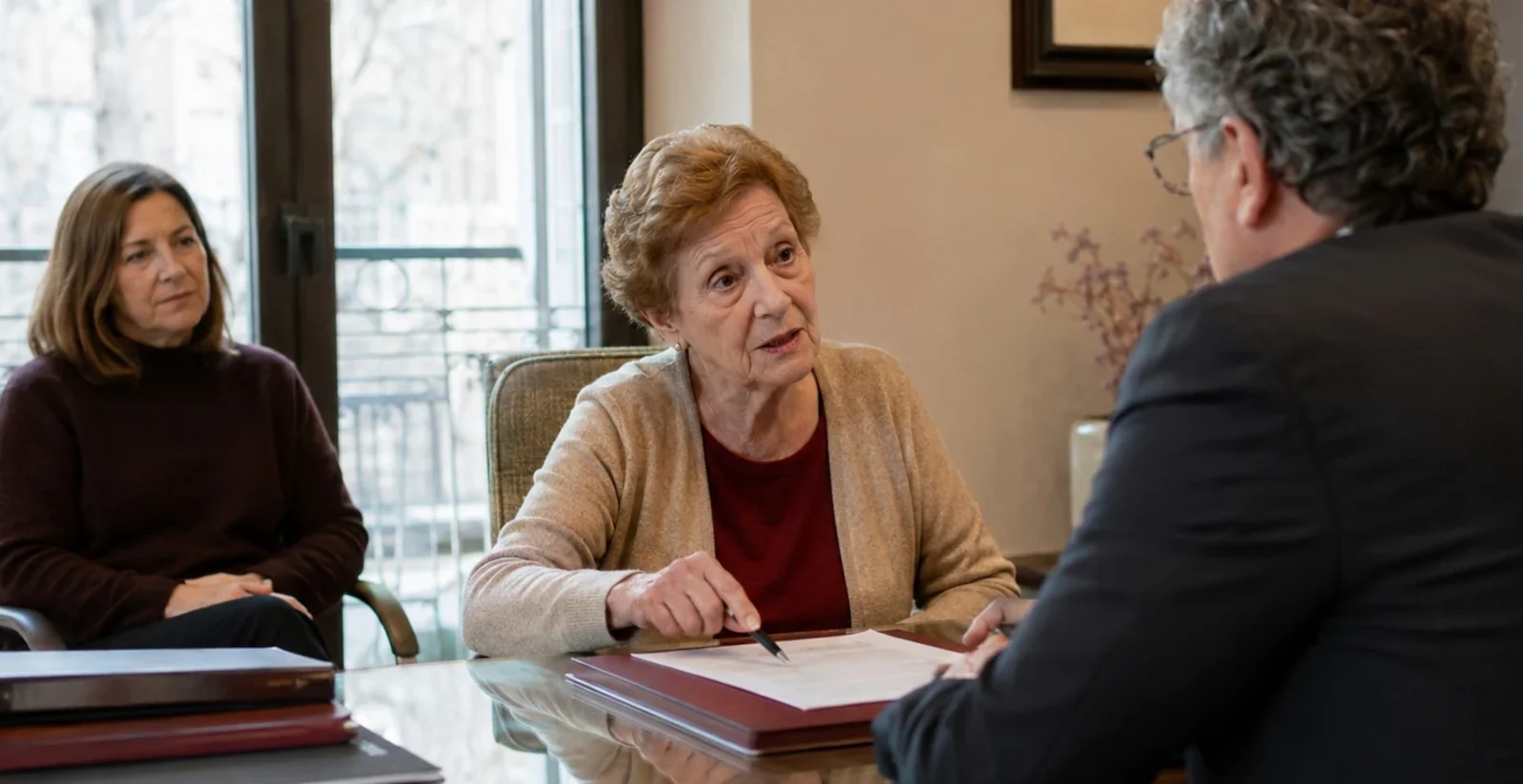
The reform has a direct bearing on the notary's assessment of capacity. The notary no longer relies on formal categories of legal capacity and must focus the assessment on the natural capacity of the testator at the time the will is made. That assessment turns on the person's understanding of the act, the coherence of the dispositions, the absence of undue influence and the suitability of the support used. The notary must verify that the person understands that they are disposing of their assets to take effect after their death, that they recognise those called to succeed them and that the dispositions reflect their own intention rather than one imposed on them.
The system of support forms part of that assessment. Law 13/2026 provides that persons with disabilities may make a will with support, understood as personal, technical or technological measures that facilitate communication, understanding and the expression of intention. Such support may consist of interpreters, alternative and augmentative communication systems, easy-read materials, pictograms, electronic devices or the presence of trusted persons who help the testator to understand the content of the will. The notary must assess the suitability of the support, ensure that it does not displace the person's own intention and record that involvement in the public instrument.
Notarial liability is heightened in this context. The notary must not only give an assessment of natural capacity but also document the support used and the circumstances of execution, so that, if the will is later challenged, it can be established that the person had sufficient natural capacity and that the support was used appropriately. A failure to take such care may give rise to civil and disciplinary liability.
3.Wills made by persons with sensory disabilities
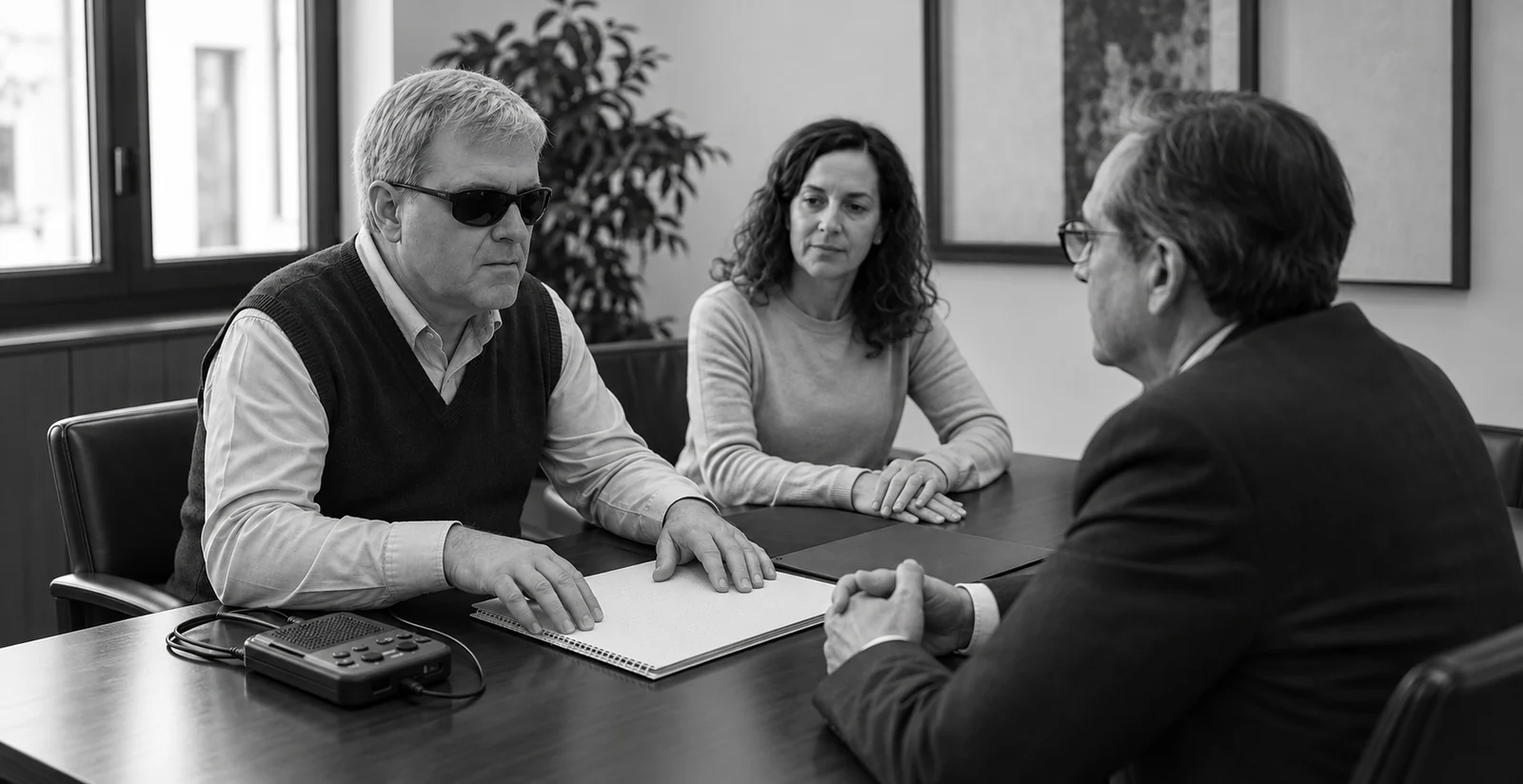
Law 13/2026 pays specific attention to wills made by persons with sensory disabilities, in particular persons with visual, hearing or communication disabilities. Cognitive and communicative accessibility, recognised in disability legislation, translates into concrete requirements for the execution of wills. The notary must ensure that the content of the will is comprehensible to the person, using means appropriate to their disability, such as reading in braille, sign language interpreters, easy-read systems or augmentative communication devices.
In the case of persons with visual disabilities, the reform may require the will to be read out in full, a copy to be provided in an accessible format and witnesses to be present to verify that it has been understood. For persons with hearing disabilities, the involvement of sign language interpreters or of written communication systems may be necessary. The essential point is that sensory disability should not become an obstacle to making a will, but rather a factor calling for reasonable adjustments and specific support.
4.Subsequent challenges to the will, undue influence and proof of natural capacity
The redefinition of capacity to make a will around natural capacity has significant consequences for subsequent challenges to the will. Claims for a declaration of nullity for lack of capacity will focus on the person's specific situation at the time of execution, not on their general legal status. Proof of natural capacity will rest on the notary's assessment, on medical reports, on the evidence of those present and on the internal coherence of the will.
The involvement of medical experts becomes relevant where doubts arise. Law 13/2026 may provide for the notary to obtain medical or psychological reports where there are reasonable doubts as to the testator's natural capacity, particularly in situations of cognitive decline, mental disorders or intellectual disability. Such reports do not replace the notary's assessment, but they complement and reinforce it. The absence of reports in doubtful cases may be an argument in a challenge, although not necessarily a decisive one.
Undue influence becomes a focus of attention. The support-based model requires those providing support not to displace the testator's intention or to bring pressure to bear on their decisions. A challenge to the will may be founded on undue influence exerted by relatives, carers or trusted persons who took part in the process of execution. Notarial liability includes the duty to detect situations of pressure or manipulation and to refuse to authorise the will where the notary considers that the intention expressed is not free.
5.Natural capacity, support and notarial liability: a delicate balance
The new paradigm of making a will with support in Catalonia calls for a delicate balance between protecting the person's autonomy and safeguarding the legal certainty of testamentary dispositions. Natural capacity becomes the central criterion, but its assessment is necessarily case by case and depends on the notary's perception and on the evidence available. Support facilitates the expression of intention, but it may also become a channel for undue influence if it is not properly managed.
Notarial liability lies at the heart of that balance. The notary must act as guarantor of natural capacity, of the suitability of the support and of the absence of undue influence, and must carefully document the circumstances of execution. The reform calls for specific training in disability, accessible communication and the assessment of natural capacity, and for particular sensitivity to situations of vulnerability.
6.A preventive perspective and a highly topical issue
The entry into force of Law 13/2026 in February 2027 makes this a highly topical field and one of considerable preventive interest. Legal practitioners will have to adapt their practice to the new rules, advising persons with disabilities and their families on the possibility of making a will with support, devising strategies to secure natural capacity at the time of execution and anticipating possible challenges. Coordination between notaries, medical experts, support services and the family environment will be key to ensuring that persons with disabilities are able to exercise their right to make a will fully and securely.
The reform of capacity to make a will in Catalonia following Law 13/2026 forms part of a wider movement towards recognition of the autonomy of persons with disabilities and the adaptation of civil law to the United Nations Convention on the Rights of Persons with Disabilities. Making a will with support becomes a concrete expression of that paradigm, and the new Catalan testamentary capacity offers fertile ground for academic and case law analysis of natural capacity, support, notarial scrutiny, challenges and liability.