Holograph wills and inheritance tax: recording the will in the notarial protocol does not stop the tax time limit
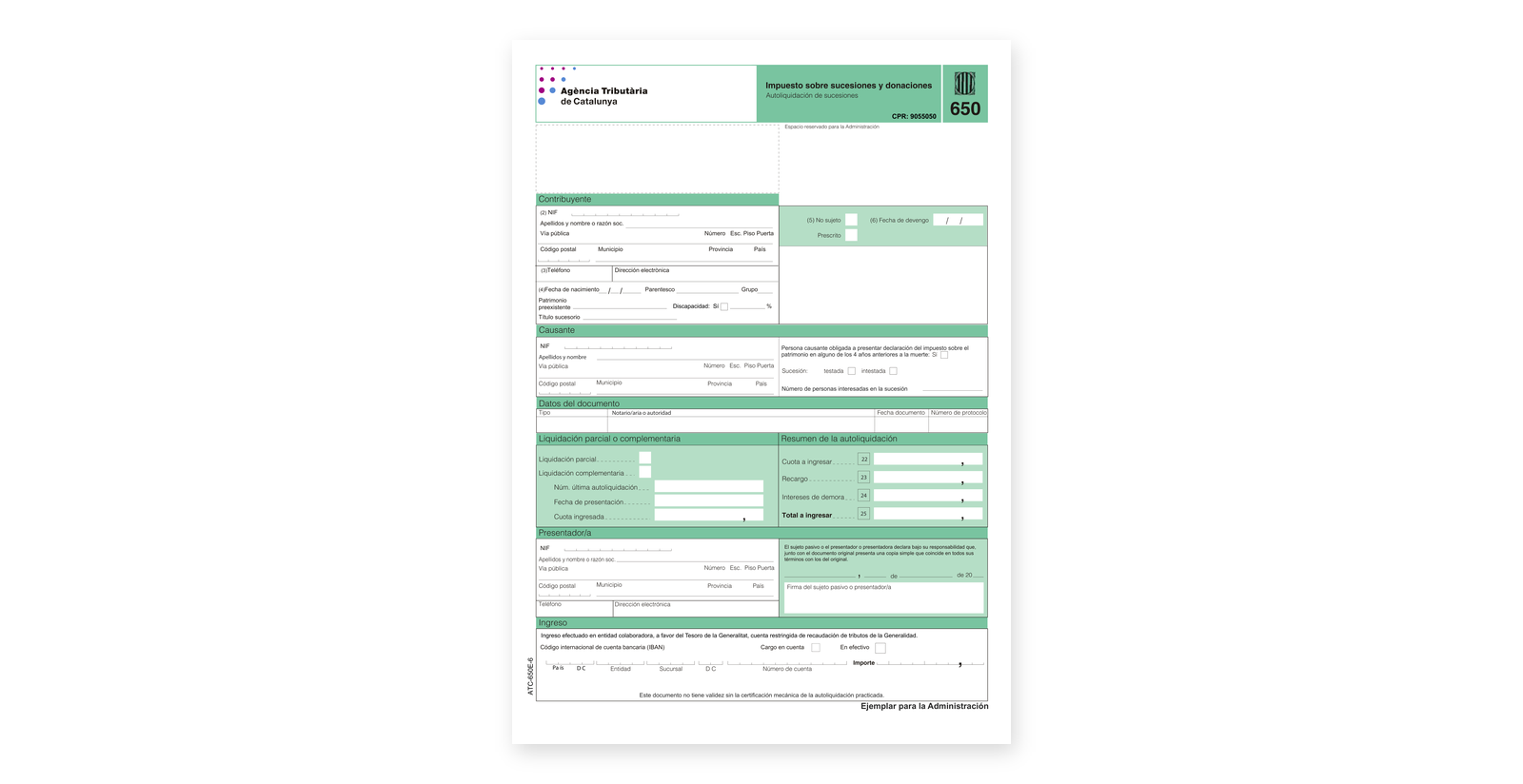
The “testamento ológrafo” —the holograph will— is a classic institution of civil law which, in order to take full effect, requires a subsequent procedure of authentication and recording in the notarial protocol. In practice, many heirs have understood that this procedure “suspends” or postpones the moment at which the obligation to declare and pay the “Impuesto sobre Sucesiones y Donaciones”, Spain's inheritance and gift tax, arises. The judgment of the Third Chamber of the “Tribunal Supremo”, Spain's Supreme Court, of 27 January 2026, Second Section, cassation appeal 1845/2024, clearly corrects that perception: where the recording of a holograph will is dealt with as non-contentious proceedings and does not become contentious, the tax accrues on the death of the deceased and the subsequent recording does not of itself postpone the start of the six-month period for filing the self-assessment. The decision has significant practical consequences in terms of surcharges, late-payment interest and limitation, and makes it necessary to distinguish between the mere handling of a non-contentious matter before a notary or a court and a genuine judicial dispute with suspensive effect on the time limits.
1.The holograph will and its notarial recording: the civil-law framework
The “Código Civil” —the Spanish Civil Code— governs the holograph will in articles 688 and 689. Article 688 requires that a holograph will may be executed only by persons of full age and that, in order to be valid, it must be written out in its entirety and signed by the testator, stating the year, month and day on which it is executed, and validating beneath his or her signature any words crossed out, amended or written between the lines. Article 689 provides that a holograph will must be recorded in the notarial protocol, by being presented, within the five years following the testator's death, to a notary, who will draw up the notarial record of that recording in accordance with the notarial legislation. Historically, the authentication and recording of a holograph will were dealt with before the first-instance judge as non-contentious proceedings; following Law 15/2015 of 2 July, the “Ley de la Jurisdicción Voluntaria” —Spain's Non-Contentious Proceedings Act—, jurisdiction lies with the notary, but the nature of the procedure remains the same: it is a matter of verifying the authenticity of the document and its compliance with the statutory requirements, without any dispute between parties unless an objection is raised.
2.Accrual of inheritance and gift tax: the general rule
In tax terms, the accrual of inheritance and gift tax is governed by article 24 of Law 29/1987 of 18 December —the LISD—. Paragraph 1 provides that, in acquisitions upon death and in life assurance policies, the tax accrues on the day of the death of the deceased or of the insured, or when the declaration of death of a missing person becomes final under article 196 of the Civil Code. Paragraph 3 adds that any acquisition of assets whose effectiveness is suspended by the existence of a condition, a term, a “fideicomiso” —a fideicommissary substitution— or any other restriction is always deemed to take place on the day on which those restrictions cease. The general rule is therefore clear: the tax accrues on death, unless the acquisition is subject to a condition, term or restriction suspending its effectiveness.
The Inheritance and Gift Tax Regulations, approved by Royal Decree 1629/1991 —the RISD—, develop this logic in article 69, which governs the suspension of the time limits for filing returns on account of “cuestiones litigiosas” (matters in dispute). Paragraph 1 provides that, where there are matters in dispute affecting the existence of the chargeable event, the determination of the taxable persons or the amount of the taxable base, the time limits for filing returns are suspended from the date on which the matter in dispute is raised until the date on which the decision resolving it becomes final. Paragraph 5, which is decisive in the Supreme Court's doctrine, expressly excludes from “cuestiones litigiosas” non-contentious proceedings where they do not become contentious, and specifically includes among them “las diligencias judiciales que tengan por objeto la apertura de testamentos o elevación de éstos a escritura pública” (judicial steps for the opening of wills or their elevation to a public deed).
3.The STS of 27 January 2026: non-contentious proceedings and the absence of suspensive effect
The judgment of 27 January 2026 decides a cassation appeal in which the heirs, appointed under a holograph will, argued that the accrual of the tax and the start of the six-month period for filing the self-assessment had to be fixed at the date on which the will was recorded in the notarial protocol, and not at the date of death. The authorities of the “Comunidad de Madrid” —the Madrid regional government— had treated as out of time a self-assessment filed several years after the death, imposing surcharges and interest, and the “Tribunal Superior de Justicia de Madrid” —the High Court of Justice of Madrid— had upheld that view. The question of cassation interest was to determine the date on which the tax accrues where the heir is appointed by a holograph will and to specify the relevance of the recording of that will in fixing the start of the filing period.
The Supreme Court dismisses the appeal and lays down doctrine. The Chamber starts from the general rule in article 24.1 of Law 29/1987: the tax accrues on the day of the death of the deceased. It then examines whether the need to record the holograph will in the notarial protocol amounts to a “limitación” —a restriction— within the meaning of article 24.3 LISD or a “cuestión litigiosa” —a matter in dispute— with suspensive effect within the meaning of article 69 RISD. The answer is no. The recording of a holograph will is an act of non-contentious jurisdiction, characterised by the absence of any dispute, both under the earlier legislation and under Law 15/2015. Article 69.5 RISD expressly excludes from matters in dispute with suspensive effect any non-contentious proceedings that do not become contentious, including steps for the opening of wills or their elevation to a public deed. The recording, as a non-contentious step, therefore neither suspends the filing time limits nor postpones the accrual of the tax.
The Chamber concludes that, where the heir is appointed by a holograph will, inheritance tax accrues on the date of the death of the deceased and that the six-month period for filing the return or self-assessment, laid down in the regional and state legislation, starts to run from that moment, and that the subsequent recording of the will does not alter that regime, unless the proceedings become contentious.
4.The six-month period, surcharges and late-payment interest
The practical consequence is that heirs must bear in mind the six-month period from the death for filing the inheritance tax self-assessment, regardless of whether or not the holograph will has been recorded in the notarial protocol. The state and regional legislation lays down this period as the general rule, with the possibility of an extension. If the self-assessment is filed out of time without a prior demand from the authorities, the surcharges for late filing under article 27 of Law 58/2003, the “Ley General Tributaria” —Spain's General Tax Act, the LGT—, apply; they vary according to the time elapsed and may range between 1 and 15 per cent, with no penalty or late-payment interest if the delay does not exceed twelve months, and with late-payment interest in addition to the surcharge if it does. If the debt is paid after the voluntary payment period following an assessment by the authorities, late-payment interest accrues under article 26 LGT, calculated on the amount not paid within the time limit for the period of the delay, at the statutory interest rate increased by 25 per cent, unless the “Ley de Presupuestos” —the State Budget Act— sets a different rate.
The STS of 27 January 2026, together with the later judgments of 30 January 2026 (appeal 682/2024) and 2 February 2026 (appeal 6890/2023), which confirm the same doctrine in cases concerning limitation, highlights the risk of surcharges and interest where heirs rely on the recording of the will “stopping” the tax clock. In the case decided on 27 January, the self-assessment was filed within the six months following the recording, but several years after the death, and the authorities treated the filing as out of time, imposing surcharges and interest. In the cases of 30 January and 2 February, the authorities began tax inspection proceedings more than four years after the expiry of the six-month period running from the death, and the Supreme Court held that the authorities' right to raise an assessment was barred by limitation, taking the view that the recording of the will had not suspended the running of the limitation period under article 67.1 LGT.
5.The possibility of applying for an extension and prudence in managing time limits
The inheritance tax legislation provides for the possibility of applying for an extension of the six-month period for filing the return or self-assessment. Article 68 of the Tax Regulations provides that, on an application by the taxable person made within the first five months of the six-month period, the authorities may grant an extension of a further six months, with late-payment interest accruing on the tax debt during the extension period. This option is particularly relevant in cases involving a holograph will, where identifying the heirs, authenticating the will and recording it in the notarial protocol may take time.
The Supreme Court's doctrine does not prevent an application for an extension; it simply clarifies that the recording of the will does not, of itself, suspend or postpone the period. Heirs who foresee difficulties in meeting the six-month period should apply for the extension within the first five months from the death, even if the holograph will has not yet been recorded in the notarial protocol. The extension grants a further six months' leeway, but it does not alter the accrual of the tax or the start of the running of the limitation period.
6.The difference between a notarial procedure and a judicial dispute with suspensive effect
The key to the Supreme Court's doctrine lies in the distinction between the mere handling of a non-contentious matter and a genuine judicial dispute. Article 69 RISD suspends the filing time limits where there are “cuestiones litigiosas” affecting the existence of the chargeable event, the determination of the taxable persons or the amount of the taxable base. Such matters in dispute may arise, for example, where the validity of the holograph will is challenged, where a person's status as heir is contested, where the existence of a legacy is questioned or where an action is brought for the nullity or ineffectiveness of the instrument of succession. In such cases, raising the matter in dispute before the administrative or civil courts may suspend the filing time limits and, where appropriate, affect the running of the limitation period.
Article 69.5 RISD, however, excludes from matters in dispute any non-contentious proceedings that do not become contentious, including steps for the opening of wills or their elevation to a public deed. The recording of a holograph will before a notary, as a non-contentious procedure without any objection, falls within that category: it is not a matter in dispute and does not suspend time limits. Only if the recording becomes contentious, for example, because one of the parties concerned objects to the authenticity of the will or to its validity and adversarial court proceedings are opened, could the suspension of time limits under article 69.1 RISD be considered.
The STS of 27 January 2026 insists on this distinction. The Chamber recalls that the non-contentious nature of the procedure for authenticating and recording the will, both under the earlier legislation and under Law 15/2015, entails the absence of any litigation, and that the Tax Regulations themselves exclude such proceedings from matters in dispute with suspensive effect. The mere handling of the matter before a notary, without any objection, does not stop the tax time limit running; a genuine judicial dispute can do so, provided that it satisfies the requirements of article 69 RISD.
7.Conclusion: accrual on death and the need to manage the time limits actively
The doctrine laid down in the STS of 27 January 2026 and confirmed by the judgments of 30 January and 2 February 2026, recorded in the Third Chamber's official case-law report for the 2025–2026 biennium, has a clear consequence: in estates devolving under a holograph will, inheritance tax accrues on the day of the death of the deceased and the six-month period for filing the self-assessment starts to run from that moment, and the subsequent recording of the will before a notary, as a non-contentious step, neither stops nor postpones that period. The recording is necessary in order to give the will full effect in civil law, but it does not alter the accrual of the tax or the regime of tax time limits.
For heirs, this means that the time limits have to be managed actively: knowing the date of death, assessing whether it is advisable to apply for an extension within the first five months, preparing the succession documentation and, where appropriate, filing the self-assessment even if the holograph will is still going through the recording procedure. Relying on the recording “suspending” the tax clock may lead to surcharges and late-payment interest, and even to the loss of the opportunity to settle the tax within the time limit if the authorities begin proceedings within the four years following the expiry of the six-month period.
At the same time, the doctrine leaves the door open to the suspension of time limits where there are genuine matters in dispute concerning the succession, dealt with in contentious proceedings affecting the existence of the chargeable event, the determination of the taxable persons or the amount of the taxable base. The difference between the mere handling of a non-contentious matter before a notary and a judicial dispute with suspensive effect is therefore decisive. Against a background in which the holograph will continues to be used and in which tax time limits are strict, the clarity provided by the Supreme Court helps to reinforce legal certainty and to avoid interpretations which, with the appearance of prudence, may prove costly for heirs.