B2B electronic invoicing and VERI*FACTU: two distinct obligations that businesses must not confuse
The Spanish system of compulsory electronic invoicing between businesses and professionals and the regime governing VERIFACTU invoicing systems share the same actors –companies, invoices and the “Agencia Tributaria” (the AEAT, Spain's tax authority)– but they respond to different logics and rest on different rules. Royal Decree 238/2026 of 25 March, published in the “BOE” (Spain's official gazette) on 31 March and in force since 20 April 2026, has defined the framework for B2B electronic invoicing, implementing article 12 of Law 18/2022 of 28 September on the creation and growth of companies, while Royal Decree 1007/2023 of 5 December, and its amendment by Royal Decree‑Law 15/2025 of 2 December, govern the requirements applicable to invoicing systems and software and the standardisation of invoicing-record formats, including the VERIFACTU system. These are two obligations that overlap in time and in the persons they bind, but they must not be confused: one concerns how invoices are issued, sent and received between businesses and professionals; the other, how invoicing data is generated, recorded and, where applicable, transmitted to the AEAT.
1.B2B electronic invoicing as a general obligation governing dealings between businesses and professionals
The starting point for B2B electronic invoicing lies in article 12 of Law 18/2022, which amended article 2 bis of Law 56/2007 of 28 December on measures to promote the information society. The new article 2 bis provides that all businesses and professionals must issue, send and receive electronic invoices in their commercial dealings with other businesses and professionals, and that the recipient and the issuer of electronic invoices must provide information on the status of the invoice. It adds that the technological solutions and platforms offered by electronic invoicing service providers must guarantee their interconnection and interoperability free of charge, and that the in-house solutions of issuing and receiving companies must meet the same criteria of free interconnection and interoperability with all other electronic invoicing solutions. It also imposes specific obligations on certain companies providing services to the public at large and provides for a system of penalties for those who do not offer the possibility of receiving electronic invoices or do not allow access to the invoices issued.
The eighth final provision of Law 18/2022 makes the effective entry into force of this obligation conditional on the approval of its implementing regulations and on obtaining the EU derogation from articles 218 and 232 of Council Directive 2006/112/EC on the common system of VAT. It provides that article 12 will take effect, for businesses and professionals whose annual invoicing exceeds eight million euros, one year after the implementing regulations are approved, and for all other businesses and professionals, two years after the approval of those regulations.
Those implementing regulations have taken the form of Royal Decree 238/2026, which lays down the legal regime applicable to electronic invoicing between businesses and professionals and to electronic invoice exchange platforms, and amends the Invoicing Regulation approved by Royal Decree 1619/2012 of 30 November. Opinion 1203/2025 of the “Consejo de Estado” (Spain's Council of State) of 29 January 2026 had already examined the draft of this royal decree, noting that the Spanish system of compulsory B2B electronic invoicing is made up of private exchange platforms and a public invoicing solution, and that businesses and professionals will be required to issue electronic invoices using structured formats and to report, through the platforms or the public solution, the status of invoices, including their payment or rejection.
Royal Decree 238/2026 sets out in detail, in line with the draft examined by the Council of State, matters such as the structured formats admitted, the interconnection and interoperability requirements applicable to private platforms, the operation of the public solution managed by the “Agencia Estatal de Administración Tributaria” (the AEAT, Spain's tax agency), the obligation to report certain invoice statuses (issue, receipt, acceptance, rejection, payment) and the coordination with the Invoicing Regulation. Under Law 18/2022, its effective application will begin, from the date of the corresponding technical order approving the specifications, twelve months later for those with a turnover above eight million euros and twenty-four months later for all other businesses and professionals.
2.Invoicing systems and VERI*FACTU: a separate regime, focused on tax control
In parallel with B2B electronic invoicing, Spanish law has developed a specific regime for the computer or electronic systems and software that support the invoicing processes of businesses and professionals. Its legal basis lies in article 29.2 j) of Law 58/2003 of 17 December, the “Ley General Tributaria” (Spain's general tax act, the LGT), which requires producers, distributors and users to ensure that the computer or electronic systems and software supporting accounting, invoicing or management processes guarantee the integrity, preservation, accessibility, legibility, traceability and unalterability of the records, without interpolations, omissions or alterations of which a proper entry is not kept in the systems themselves, and which empowers the implementing regulations to lay down technical specifications and an obligation of certification and use of standard formats.
That implementation took the form of Royal Decree 1007/2023 of 5 December, approving the Regulation which lays down the requirements to be met by the computer or electronic systems and software supporting the invoicing processes of businesses and professionals, and the standardisation of invoicing-record formats, known as the VERIFACTU Regulation. That regulation defines what is meant by an invoicing system, lays down technical requirements on the generation, recording, preservation and, where applicable, transmission of invoicing records, and provides for systems to operate in VERIFACTU mode, transmitting all invoicing records to the AEAT in a continuous, secure, correct, complete, automatic, consecutive, instantaneous and reliable manner.
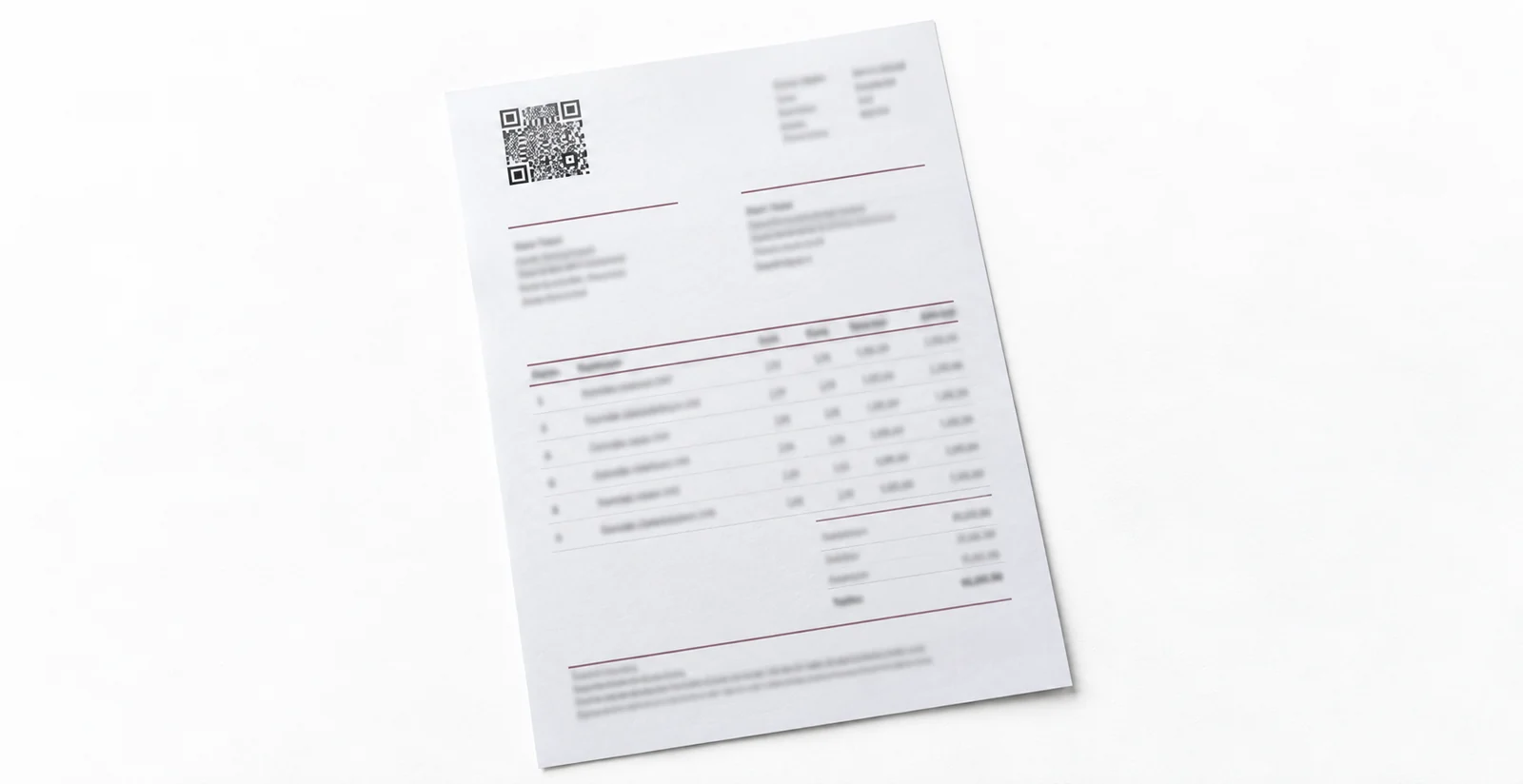
The Invoicing Regulation approved by Royal Decree 1619/2012 has been amended in order to bring it into line with VERIFACTU. In particular, article 6.5 b) of the Invoicing Regulation requires that, in the case of invoices issued using the computer systems referred to in the VERIFACTU Regulation, a graphic representation of part of the content of the invoice be included by means of a QR code and, where applicable, the wording “Factura verificable en la sede electrónica de la AEAT” (invoice verifiable at the AEAT's electronic office) or “VERIFACTU”, in accordance with the technical specifications laid down by ministerial order. Administrative guidance, such as binding ruling V0484‑26 of 3 March 2026 and V0169‑26 of 29 January 2026, has clarified the scope of these obligations and has insisted that the VERIFACTU wording is to be included only where the system does in fact transmit all invoicing records to the AEAT.
3.VERI*FACTU adaptation deadlines: the extension to 2027
The entry into force of the VERIFACTU obligations has been the subject of adjustments. The fourth final provision of Royal Decree 1007/2023 initially set certain adaptation deadlines, but Royal Decree‑Law 15/2025 of 2 December, adopting urgent measures to encourage investment activity by local authorities and by the autonomous communities and amending Royal Decree 1007/2023, has extended those deadlines. The new wording of the fourth final provision provides that the taxable persons referred to in article 3.1 a) of the VERIFACTU Regulation, that is, corporation tax payers, must have their computer systems adapted to the features and requirements laid down in the regulation and in its implementing rules before 1 January 2027, and that the remaining taxable persons mentioned in article 3.1, in particular payers of the “IRPF” (Spain's personal income tax) who carry on economic activities, payers of non-resident income tax with a permanent establishment and entities under the income-attribution regime which carry on economic activities, must have those systems operational before 1 July 2027.
Administrative guidance has taken up these deadlines. The explanatory material on the VERIFACTU Regulation published in October 2024 and updated following Royal Decree‑Law 15/2025 explains that, after the amendment, corporation tax payers must adapt before 1 January 2027 and the remaining persons under the obligation before 1 July 2027. Binding rulings such as V0622‑26 of 18 March 2026 and V0298‑26 of 12 February 2026 recall these deadlines and refer to the AEAT's dedicated portal on VERIFACTU invoicing systems, where frequently asked questions have been published to clarify doubts as to the scope of the obligations.
4.B2B electronic invoicing and VERI*FACTU: persons bound, subject matter and purpose
The overlap in time and in the persons bound may give rise to confusion, but B2B electronic invoicing and VERI*FACTU are distinct obligations. B2B electronic invoicing, governed by Law 18/2022 and Royal Decree 238/2026, concerns the form and the channel for issuing, sending and receiving invoices between businesses and professionals. It requires invoices to be issued in a structured electronic format, to be exchanged through private platforms or the public solution and to have their statuses reported, including payment or rejection. Its main purpose is the digitalisation of commercial dealings, the reduction of administrative costs, improved traceability of payments and the fight against late payment, in line with the objectives of Law 18/2022 of fostering business growth and transparency.
VERI*FACTU, by contrast, concerns internal invoicing systems and the quality of invoicing records for tax purposes. It requires the computer systems and software which generate and preserve invoices to meet technical requirements of integrity, unalterability, traceability and standardisation, and it offers the possibility of transmitting invoicing records to the AEAT in near real time. Its main purpose is to improve the quality of tax information, to facilitate the control of VAT and other taxes, to reduce fraud and to simplify formal obligations through the automation and standardisation of records.
As regards the persons bound, B2B electronic invoicing affects all businesses and professionals in their commercial dealings with other businesses and professionals, with differing application deadlines according to turnover. VERIFACTU affects taxable persons who use invoicing systems, with differing adaptation deadlines according to the type of taxpayer. In practice, many companies will be subject to both obligations: they will have to issue and receive B2B electronic invoices and, at the same time, to adapt their invoicing systems to VERIFACTU. But compliance with one does not take the place of compliance with the other.
5.Practical interaction and business planning
The interaction between the two regimes calls for planning. A company with a turnover above eight million euros will have to be ready to issue and receive B2B electronic invoices within twelve months of the approval of the technical order implementing Royal Decree 238/2026, and to adapt its invoicing systems to VERIFACTU before 1 January 2027 if it is a corporation tax payer. A company with a lower turnover will have twenty-four months for B2B electronic invoicing and until 1 July 2027 for VERIFACTU if it is taxed under the IRPF on economic activities or under non-resident income tax with a permanent establishment.
From a technical standpoint, implementing B2B electronic invoicing means selecting or developing electronic invoicing solutions which comply with the structured formats required, which can connect to private platforms and to the AEAT's public solution, and which make it possible to report invoice statuses. Adapting to VERIFACTU means reviewing internal invoicing systems in order to ensure that they generate invoicing records in accordance with the standard defined by the regulation, that they include the QR code and, where applicable, the VERIFACTU wording on invoices, and that they are able to transmit the records to the AEAT if the verifiable mode is chosen.
Coordination between the two projects is advisable. Taking the implementation of B2B electronic invoicing as an opportunity to review and adapt invoicing systems to VERIFACTU can reduce costs and avoid duplication. At the same time, it is important not to confuse the requirements: the use of a B2B electronic invoicing platform does not in itself guarantee compliance with VERIFACTU if the internal invoicing system does not meet the requirements of Regulation 1007/2023; and the adaptation of systems to VERI*FACTU does not release a company from the obligation to issue and receive B2B electronic invoices in accordance with Royal Decree 238/2026.
6.Conclusion: two parts of a single drive towards digitalisation, but with different logics
B2B electronic invoicing and VERIFACTU are two parts of a single movement towards digitalisation and control, but with different logics. The first transforms the way in which companies deal with one another, imposing electronic invoicing as a compulsory standard in B2B dealings and putting in place a system of private platforms and a public solution for their exchange and monitoring. The second transforms the way in which companies generate, record and, where applicable, report their invoicing data to the tax authorities, imposing technical requirements on computer systems and offering the VERIFACTU mode as a tool of control and simplification.
For companies, the key lies in understanding that these are distinct obligations, with different legal bases –Law 18/2022 and Royal Decree 238/2026, on the one hand; the LGT, Royal Decree 1007/2023 and Royal Decree‑Law 15/2025, on the other, with specific application deadlines and with complementary purposes. Confusing them may lead to breaches and penalties, but integrating them into a coherent strategy of digitalisation and compliance can turn a regulatory challenge into an opportunity to modernise administrative processes and to improve dealings with the tax authorities.