Tax

We work alongside companies on a lasting basis when they need an adviser who knows their business, their structure and their economic reality. We also build the tax analysis into our commercial, asset-related, real-estate, succession and transactional advice whenever tax may influence the way a transaction is structured or carried out.

We do not see tax advice as the mere preparation of returns. The real value appears earlier, in identifying the tax consequences of a decision, comparing the alternatives and anticipating risks. The same economic purpose may be achieved through different legal structures and produce tax consequences that also differ, so that tax must form part of the analysis from the moment any transaction is designed.

Tax built into the legal advice

Tax law is present, directly or indirectly, in a large part of the asset and business decisions on which we advise. A sale and purchase of assets, an acquisition or transfer of quotas —the “participaciones” of a Spanish limited company—, a real-estate transaction, a change in the company's structure, a reorganisation of assets, a succession or a particular contractual structure may produce tax consequences capable of determining whether the transaction is advisable, what it costs and how it is carried out.

For that reason, where a transaction has a significant tax dimension, the tax analysis forms part of the legal strategy from the outset. It is not simply a matter of determining which taxes will have to be paid once the transaction has completed, but of understanding how tax bears on the various alternatives available and of weighing their legal, economic and tax consequences together.

Ongoing tax advice to companies

We work with clients who are looking for more than a supplier to whom they periodically send the information needed to prepare their returns. The way we provide the service calls for knowledge of the company's business, its structure, its routine transactions and the matters capable of affecting its tax position. That continuing knowledge allows us to respond more quickly, to anticipate issues and to assess the tax consequences of each decision before it becomes irreversible.

We take on the monitoring of the company's periodic and annual tax obligations, the review of its tax position, the analysis of the questions that arise in its ordinary activity and advice on transactions or circumstances calling for specific treatment. Where the company has an in-house structure of its own, the service also covers support for its finance, tax and administration departments.

Tax procedures, audits and defence before the tax authorities

Ongoing tax advice also includes assisting the company in its dealings with the tax authorities. We represent and defend our clients in tax management, verification and audit procedures, examining both the tax questions in dispute and the accounting, contractual and corporate documentation from which the company's position derives.

Where a tax assessment, a penalty or another tax act has to be challenged, we prepare the corresponding appeals and “reclamaciones económico-administrativas” —claims before Spain's specialised tax tribunals— and, where necessary, we take part in the subsequent proceedings before the administrative courts. In these proceedings, particular value attaches to the combination of tax practice with our litigation experience and with whatever prior knowledge we have of the company. A tax audit cannot always be analysed from the tax rules alone, because the facts under examination sometimes arise from contracts, corporate transactions, dealings with shareholders, assets or business decisions whose correct legal interpretation proves decisive.


Publications

Sale of the former home after a separation: when the reinvestment exemption in personal income tax is retained

The disposal of the family home after a separation, divorce or annulment raises a recurring problem under the “IRPF”, Spain's personal income tax: can the spouse who had to leave the home continue to benefit from the exemption for reinvestment in a principal residence laid down in article 38 of Law 35/2006 of 28 November on personal income tax —the LIRPF—, when he or she sells his or her share and acquires a new dwelling? The judgment of the Third Chamber of the “Tribunal Supremo”, Spain's Supreme Court, of 27 May 2026, Second Section, cassation appeal 6833/2024, confirms and consolidates the doctrine begun by STS 553/2023 of 5 May and answers in the affirmative: the spouse who leaves the home under a court decision may satisfy the occupation requirement for the exemption where the other spouse and the couple's children have continued to live there. The key lies in a systematic interpretation of the concept of principal residence in article 41 bis of the “Reglamento del IRPF” —Spain's personal income tax regulations, the RIRPF—, approved by Royal Decree 439/2007 of 30 March, and in treating the family home as the point of reference.

Read more

Directors' remuneration: a company-law irregularity does not automatically render the expense non-deductible

The tax deductibility of directors' remuneration has traditionally been an area of friction between companies and the tax authorities, particularly where the remuneration does not strictly comply with the requirements of the “Ley de Sociedades de Capital” —the Spanish Companies Act, the LSC—. The judgment of the Third Chamber of the “Tribunal Supremo”, Spain's Supreme Court, of 18 May 2026 (the “Sala de lo Contencioso‑Administrativo”, the administrative-law chamber, Second Section, cassation appeal 8019/2023) consolidates the doctrine begun by STS 1053/2024 of 13 June and clarifies that a company-law irregularity, such as the failure of the general meeting to approve the maximum amount of the directors' annual remuneration, is not in itself sufficient to render the expense non-deductible under article 15.f of Law 27/2014 on corporation tax. Where the services are real, the remuneration has been paid and recorded in the accounts and there is a correlation with the business activity, the authorities may not refuse the deduction merely by invoking a formal company-law breach. The question becomes what the company must document in order to establish the reality and necessity of the expense and in which cases the authorities may still legitimately refuse it.

Read more

B2B electronic invoicing and VERI*FACTU: two distinct obligations that businesses must not confuse

The Spanish system of compulsory electronic invoicing between businesses and professionals and the regime governing VERIFACTU invoicing systems share the same actors –companies, invoices and the “Agencia Tributaria” (the AEAT, Spain's tax authority)– but they respond to different logics and rest on different rules. Royal Decree 238/2026 has defined the framework for B2B electronic invoicing, implementing article 12 of Law 18/2022 of 28 September on the creation and growth of companies, while Royal Decree 1007/2023 of 5 December, and its amendment by Royal Decree‑Law 15/2025 of 2 December, govern the requirements applicable to invoicing systems and software and the standardisation of invoicing-record formats, including the VERIFACTU system. These are two obligations that overlap in time and in the persons they bind, but they must not be confused: one concerns how invoices are issued, sent and received between businesses and professionals; the other, how invoicing data is generated, recorded and, where applicable, transmitted to the AEAT.

Read more

Can the tax authorities use a mortgage valuation to raise the tax value of a property?

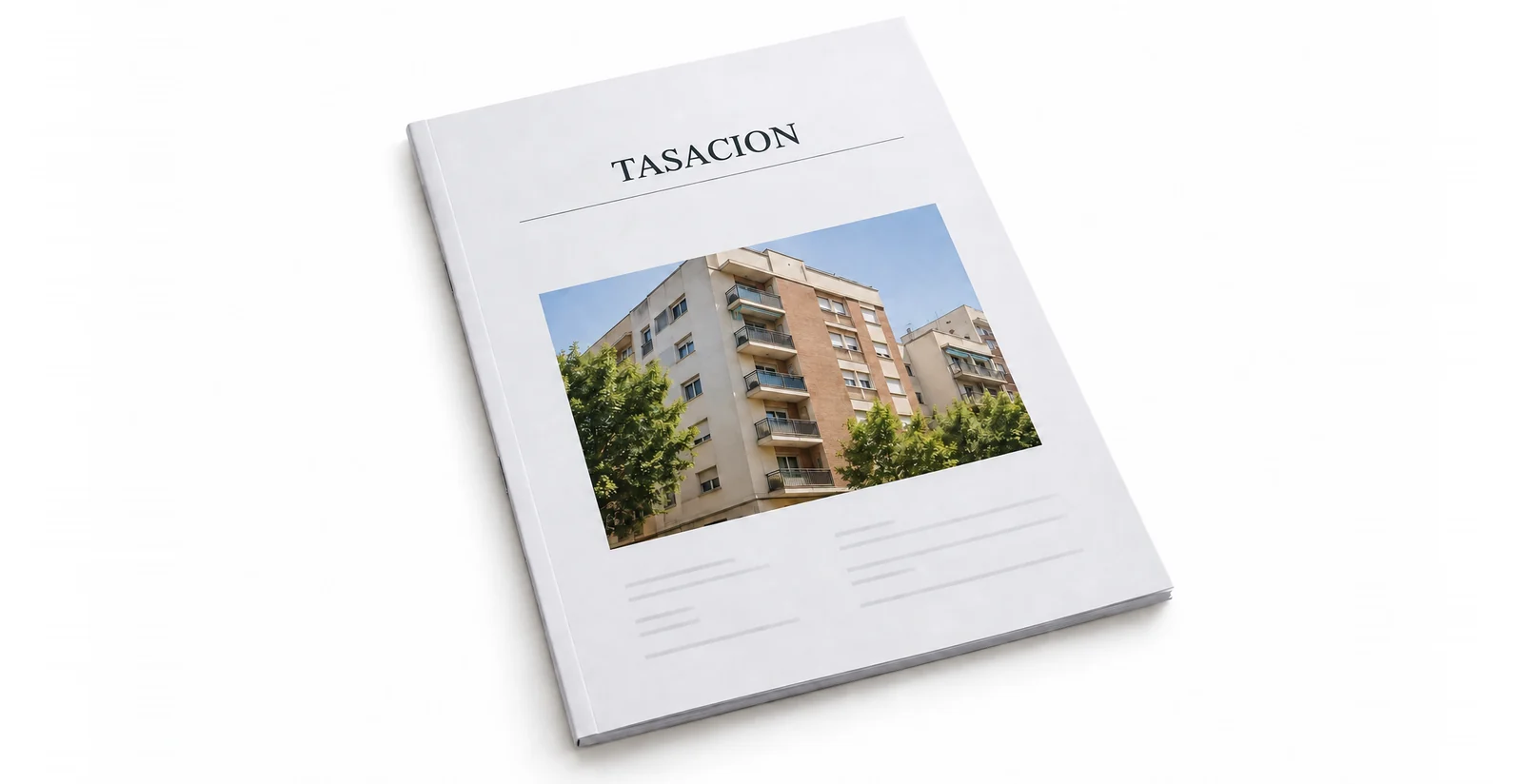
The use by the tax authorities of the mortgage valuation incorporated into the deed in order to raise the tax value of a property has been the subject of intense debate in academic commentary and in the case law. The judgments of the Third Chamber of the “Tribunal Supremo”, Spain's Supreme Court, of 23 and 27 February 2026, in line with the Chamber's official case‑law report for the 2025–2026 two‑year period, confirm that, in cases where a “comprobación de valores” —a review of declared values— is available, the tax authorities may have recourse to the mortgage valuation figure where there is a material difference from the value declared, without any need to establish fraud or concealment beforehand. That valuation does not, however, become an irrebuttable presumption: the taxpayer may contest it by means of expert evidence and, where appropriate, through the “tasación pericial contradictoria”, the adversarial expert valuation provided for in the “Ley General Tributaria”, Spain's General Tax Act —the LGT—. This mechanism must be clearly distinguished from the cadastral reference value, which operates as a direct taxable base in the “Impuesto sobre Transmisiones Patrimoniales y Actos Jurídicos Documentados”, Spain's transfer tax and stamp duty, and in the “Impuesto sobre Sucesiones y Donaciones”, its inheritance and gift tax.

Read more

Holograph wills and inheritance tax: recording the will in the notarial protocol does not stop the tax time limit

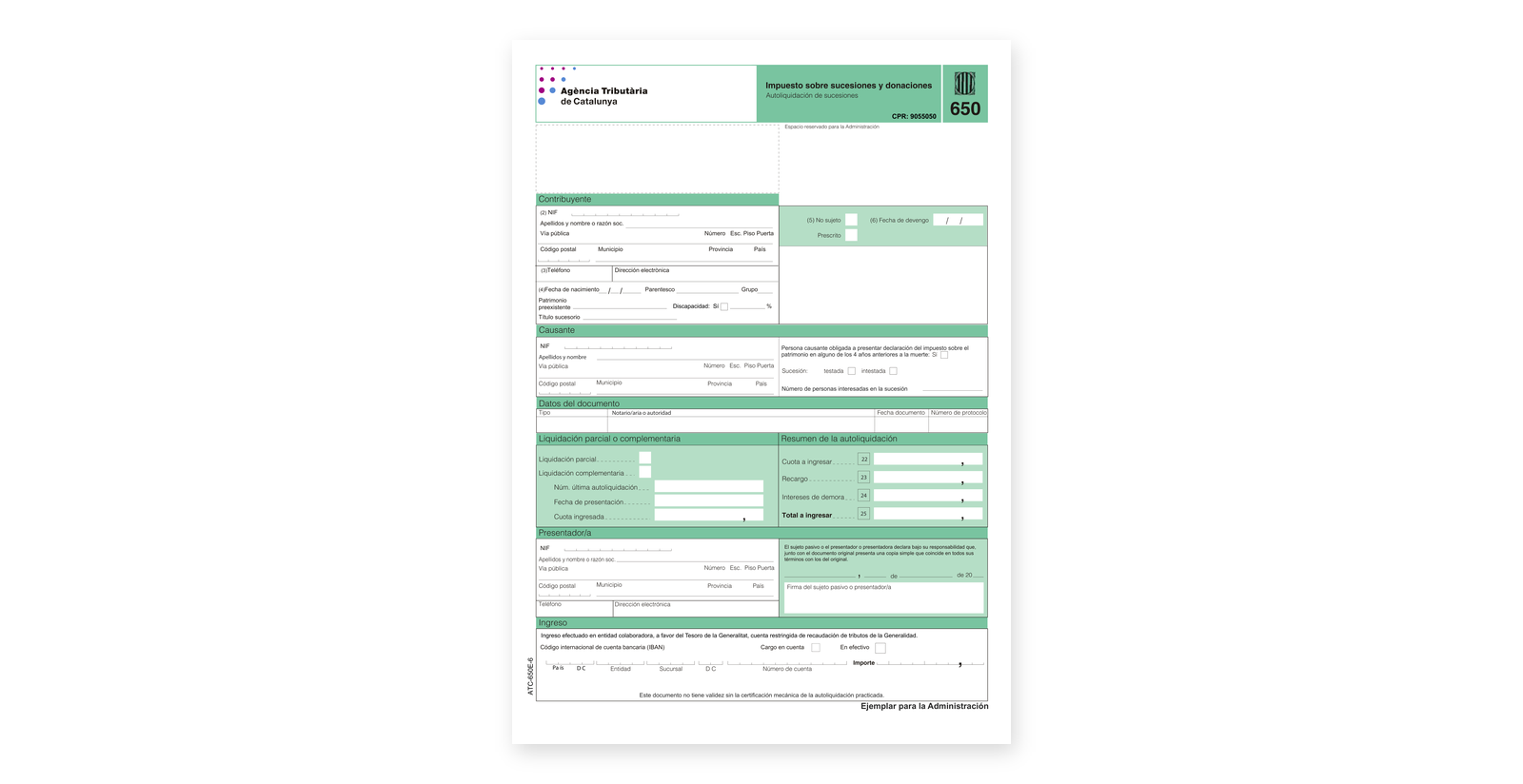
The “testamento ológrafo” —the holograph will— is a classic institution of civil law which, in order to take full effect, requires a subsequent procedure of authentication and recording in the notarial protocol. In practice, many heirs have understood that this procedure “suspends” or postpones the moment at which the obligation to declare and pay the “Impuesto sobre Sucesiones y Donaciones”, Spain's inheritance and gift tax, arises. The judgment of the Third Chamber of the “Tribunal Supremo”, Spain's Supreme Court, of 27 January 2026, Second Section, cassation appeal 1845/2024, clearly corrects that perception: where the recording of a holograph will is dealt with as non-contentious proceedings and does not become contentious, the tax accrues on the death of the deceased and the subsequent recording does not of itself postpone the start of the six-month period for filing the self-assessment. The decision has significant practical consequences in terms of surcharges, late-payment interest and limitation, and makes it necessary to distinguish between the mere handling of a non-contentious matter before a notary or a court and a genuine judicial dispute with suspensive effect on the time limits.

Read more

The price of a company cannot always be fixed at signing: locked box, completion accounts and earn-outs

In the sale and purchase of companies, the price is rarely a static figure fixed once and for all at the moment of signing. The initial financial valuation, based on assumptions as to debt, cash, working capital and results, does not always match the amount that the buyer must ultimately pay. To manage this uncertainty, practice uses various contractual mechanisms for determining and adjusting the price, chief among them locked box structures, adjustments by means of completion accounts and earn-outs. What is apparently a financial question becomes a central part of the contractual architecture of the transaction, with direct implications for the allocation of risk, for the definition of economic concepts and for the potential for subsequent litigation.

Read more
See all related publications

The team on this area