
Publications

Work commissioned without a valid contract: what the contractor can recover from the public authority

Irregular procurement by public authorities, in particular through oral commissions or contracts that are void for breach of the procurement rules, raises a classic conflict between the prohibition of contracting outside the law and the need to prevent the unjust enrichment of a public authority that has received and taken the benefit of the works or services. The judgment of the Third Chamber of the “Tribunal Supremo”, Spain's Supreme Court, of 15 June 2026, Fourth Section, cassation appeal 9117/2024, sets precise limits on the compensation available in such cases: the contractor may recover the actual cost of the works or services, including any value added tax —the Spanish “Impuesto sobre el Valor Añadido”, or IVA— which it has been unable to recover, but not the overheads (“gastos generales”) or the profit mark-up (“beneficio industrial”) proper to a validly awarded contract. Moreover, the late-payment interest regime of Law 3/2004 on combating late payment in commercial transactions does not apply automatically; what applies is the statutory interest laid down in the “Ley General Presupuestaria”, Spain's General Budget Act. The question is of particular relevance for local-authority contractors and public bodies which, in practice, continue to receive work without proper contractual cover.


Read more

Administrative electronic notifications: how the ten days for them to be deemed refused are counted

The spread of electronic notifications has made the calculation of time limits a critical element in the relationship between citizens, businesses and the “Administraciones Públicas”, Spain's public authorities. Article 43.2 of the “Ley 39/2015, de 1 de octubre, del Procedimiento Administrativo Común de las Administraciones Públicas” —Law 39/2015 of 1 October, the Common Administrative Procedure Act— provides that, where electronic notification is compulsory or has been expressly chosen by the party concerned, it is deemed refused once ten calendar days have elapsed from the moment it was made available without its content being accessed. The judgment of the Third Chamber of the “Tribunal Supremo”, Spain's Supreme Court, of 12 June 2026, in line with the Chamber's official report for the 2025–2026 biennium, clarifies for the first time that those ten calendar days run from the day after the notification is made available to the party concerned on the “sede electrónica”, the authority's electronic portal, or at the “dirección electrónica habilitada única”, the single authorised electronic address. Once the period has elapsed without access, the notification is deemed refused and the time limits for appeal begin to run. The decision has direct consequences for businesses, professionals and citizens required to deal with the authorities by electronic means and underlines the importance of checking electronic mailboxes regularly.

Read more

A prior notification allows the activity to begin, but it is not an administrative authorisation

The widespread use of the prior notification and of the “declaración responsable” —the declaration of compliance— as instruments replacing licences has transformed the way in which citizens and businesses deal with public authorities. That transformation has, however, also given rise to confusion as to the legal nature of these instruments and as to their review by the courts. The judgment of the Third Chamber of the “Tribunal Supremo”, Spain's Supreme Court, of 20 April 2026, Fifth Section, cassation appeal 2290/2023, makes it clear that a prior notification is not an administrative act open to challenge as though it were a licence. It is a declaration by the private party to which the law attributes authorising effect, enabling the activity to be started or the right to be exercised from the day of its filing, without prejudice to the public authority's subsequent powers of verification, inspection and response. If false statements, omissions or breaches come to light, it is the subsequent administrative act –of ineffectiveness, suspension, closure or penalty– that may be challenged. The doctrine has significant consequences for business openings, economic activities, property owners, local councils and affected third parties.

Read more

New urban developments and water availability: when a planning instrument can be annulled

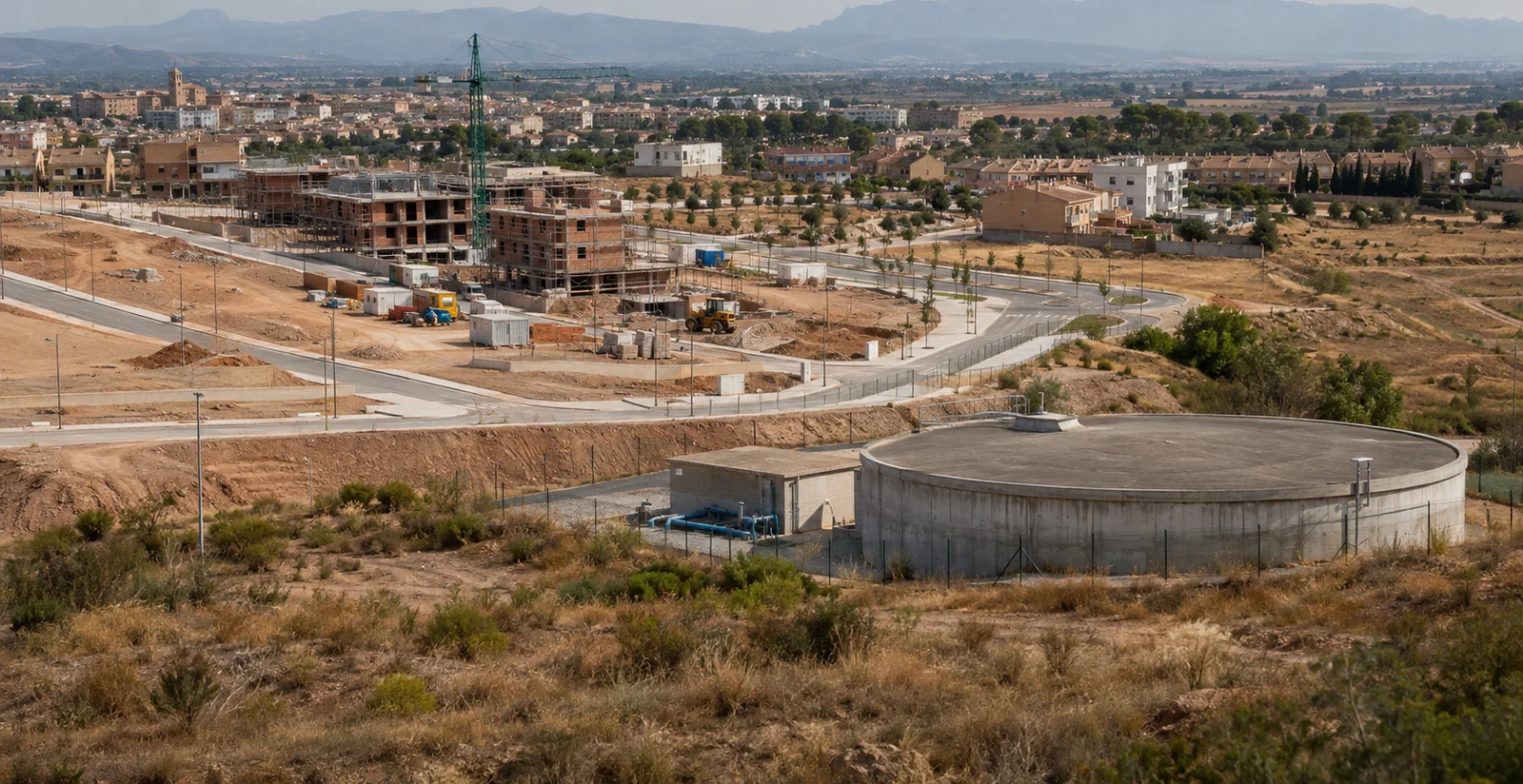
Urban expansion is no longer measured solely in square metres of classified land, but also in cubic metres of legally available water. The judgment of the Third Chamber of the “Tribunal Supremo”, Spain's Supreme Court, of 15 April 2026, Fifth Section, cassation appeal 9014/2023, clearly establishes that the creation of new development areas requires the sufficiency and the legal availability of water resources to be verified, even where the municipality is losing population. The binding report of the river basin authority, the Spanish “organismo de cuenca”, cannot be omitted or deprived of content where the development will generate new demands for water, and failure to comply with it may lead to the annulment of the plan. The judgment also accepts that the annulment may be confined to particular sectors where the defect can be isolated without affecting the coherence of the rest of the plan. The doctrine is of direct interest to developers, landowners, local councils and practitioners involved in preparing or challenging planning instruments.

Read more

Public authorities that decide by algorithm: what transparency the BOSCO case requires

The progressive automation of administrative action has brought to the fore the question of how decisions taken by means of algorithms are to be explained and reviewed. Judgment 1119/2025 of 11 September of the Third Chamber of the “Tribunal Supremo”, Spain's Supreme Court, known as the BOSCO case and highlighted in the Third Chamber's official case-law report for 2025–2026, marks a landmark in this field by recognising that, where public authorities use automated systems to grant rights or social benefits, the right of access to public information may require, in certain circumstances, that even the source code of the program be disclosed. The decision rests on article 105 b) of the Spanish Constitution, on Law 19/2013 on transparency, access to public information and good governance, on the rules governing automated administrative action in Law 40/2015 and on the European data protection framework of Regulation (EU) 2016/679 —the GDPR—. Algorithmic transparency ceases to be a technical question and becomes a structural requirement of the digital rule of law.

Read more