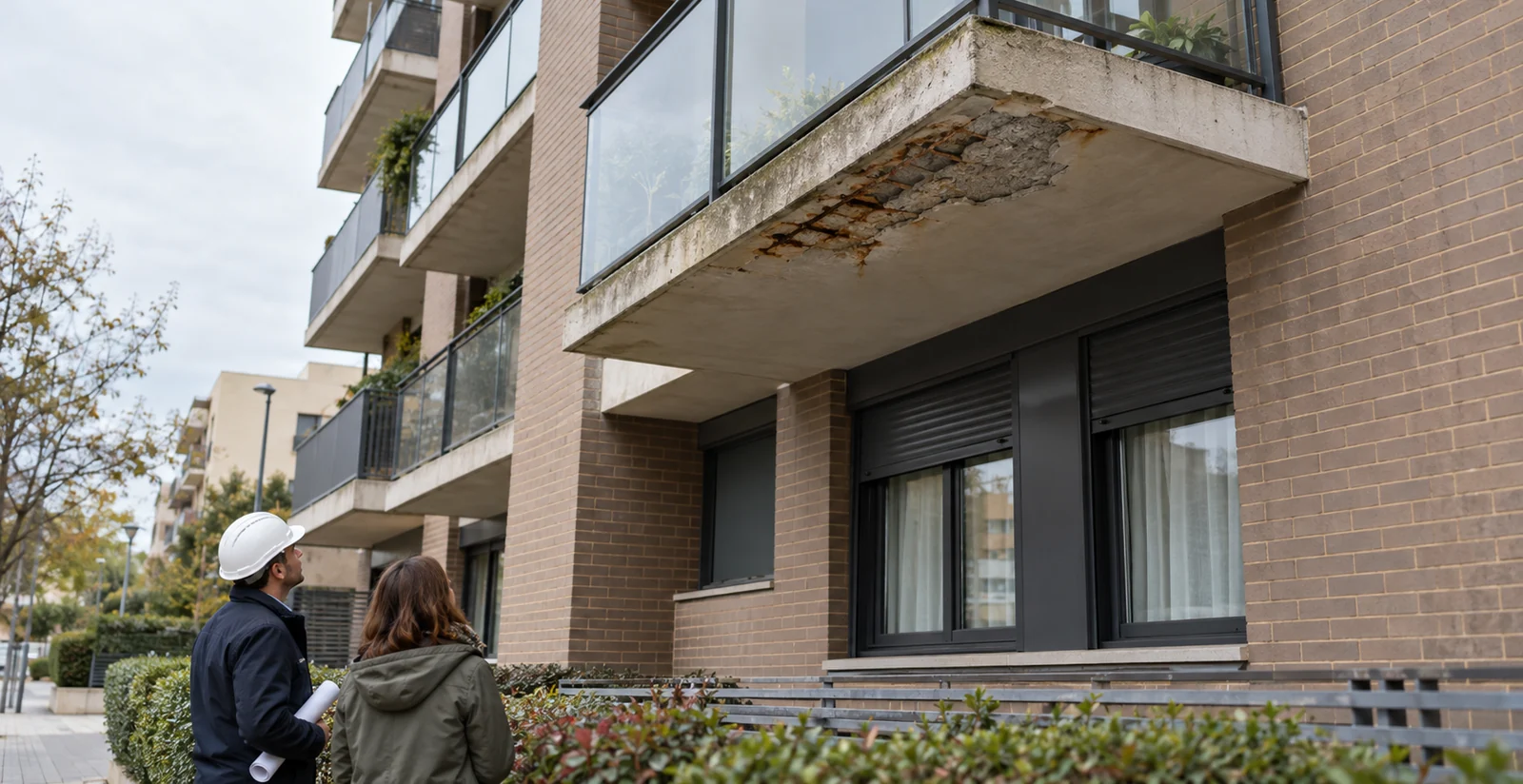
Litigation

We are lawyers specialising in litigation. Since 1992 we have acted in more than 20 000 court proceedings in defence of the property interests of companies and individuals before the courts of Barcelona, of Catalonia and of the rest of Spain.

Where a dispute cannot be resolved by negotiation, litigation experience shows its full worth. More than thirty years in practice allow us to analyse the client's legal position with rigour, to anticipate the risks, to assess the evidence and to conduct each set of proceedings with judgement, perspective and practical sense. Designing an effective strategy takes more than knowing the procedure; it requires a command of the law governing the dispute. Our thorough knowledge of both national and Catalan property and contract law allows us to approach every piece of litigation from that dual perspective, substantive and procedural.

Strategy before litigation

We take the view that the best defence of the client's interests does not always lie in going to court. Before commencing proceedings, we explore the possibilities of reaching a solution through negotiation, mediation, conciliation or settlement, assessing the advantages, the risks, the cost and the time of each alternative. That said, once the negotiated route is exhausted, preparation becomes decisive, because every set of proceedings calls for a strategy of its own. We analyse the strengths and weaknesses of each position, the relief that may be sought, the defences that may be raised, the evidence available and the various procedural scenarios before taking the fundamental decisions in the litigation.

Our conduct of the case covers every stage of the proceedings, including the preliminary steps, the claim or the defence, interim measures where appropriate, the strategy on evidence, the “audiencia previa” —the pre-trial hearing—, the trial, any appeals and the enforcement of the decision obtained. Every matter has a lawyer in charge who knows the case file at first hand and takes part in defining and carrying out the strategy. Direct communication with the client and a clear legal assessment of the various alternatives form part of the way we understand litigation as a boutique service.

Property and contract law, and Catalan civil law

An essential part of civil and commercial litigation arises from relationships of a property nature, such as contracts, obligations, ownership, civil liability, corporate relationships, tenancies, successions or security. Our specialisation in property and contract law is therefore the foundation of our litigation practice. The strategy in a piece of litigation cannot be separated from the substantive law that determines the position of the parties. Before deciding how to frame proceedings, it is necessary to know precisely the applicable law, the client's legal position, the facts that have to be proved and the evidence required to prove them.

In Catalonia, this analysis also calls for a thorough knowledge of Catalan civil law and of its own institutions where they apply to the dispute. The integration of substantive and procedural knowledge, one of the features that distinguish our practice, allows us to approach property litigation with an overall view.

Experience in civil and commercial litigation

Our experience covers, among others, disputes arising from contracts and obligations, such as actions for nullity, performance, termination and rescission of contract, claims for payment, breaches of contract, lack of conformity, the warranty against eviction and latent defects, rescission for ultra dimidium loss and disputes concerning distribution, agency, franchise and concession agreements. Our practice also includes actions in defence of the right of ownership, the division of co-owned property, possessory and pre-emption actions, residential and commercial tenancies, condominium (“propiedad horizontal”) and disputes relating to real property and to the construction process.

In the field of civil liability, we act in disputes over contractual and non-contractual liability, professional and medical liability, as well as in claims for defective products, for damage arising from construction and for road traffic accidents.

In the corporate and commercial field we conduct proceedings challenging company resolutions, disputes between shareholders, directors' and board members' liability, unfair competition and disputes relating to industrial property.

We also act in succession disputes concerning the validity and interpretation of testamentary provisions, forced shares (“legítimas”), declarations of heirship and actions for recovery and division of the estate.

We likewise have extensive experience in the enforcement of court decisions and other enforceable instruments, monetary claims, mortgage enforcement and proceedings aimed at giving effect to the rights recognised to the client.


Publications

MASC and possession claims: case-law criteria on content, form and time limits

Since 3 April 2025, the “Ley Orgánica 1/2025” —LO 1/2025— has introduced, as a general rule, a pre-action requirement consisting of a prior attempt at negotiation or of recourse to an appropriate means of dispute resolution —a “medio adecuado de solución de controversias” or MASC— in civil proceedings on the merits. In the field of residential and commercial tenancies, this requirement has given rise to significant practical problems: the identity between the out-of-court demand and the claim, evidence of the attempt at negotiation, its relationship with the demand that bars reinstatement of the tenancy, and the way it operates in rent claims and in possession claims based on expiry of the contractual term. In Catalonia, some courts, such as the Civil Division of the “Audiencia Provincial” of Girona, the provincial appellate court, have begun to define criteria on the content, the form and the timing of the MASC required in possession claims, thereby shaping a new map of procedural prerequisites for tenancy claims.

Read more

What went unsaid in the first lawsuit can no longer be pleaded in the second. Res judicata and preclusion against the reopening of an owners' association resolution

A company that owned a flat sought to argue for a second time, nine years on, whether the by-law prohibition on tourist use in its building applied to it. It tried with new packaging, challenging what had been said at a later general meeting and relying on an administrative-court judgment it had obtained in the meantime. The court upheld the plea of res judicata raised by this Barcelona law firm in defence of the owners' association, ordered the dismissal of the proceedings at the pre-trial hearing itself and awarded costs against the claimant. The lawsuit ended without a trial.

Read more

How far may a professional limit their own liability? Exclusion clauses, fees and freedom of contract after Supreme Court Judgment 949/2026

Judgment 949/2026 of 18 June of the “Tribunal Supremo” —Spain's Supreme Court, hence STS— examines a professional services contract entered into by a law firm which capped the professional's maximum liability at the amount of the fees received. The Chamber declares the clause void, not because it amounted to standard terms used against a consumer, but because it is incompatible with the structural principles of the contract and with the compensatory function of contractual liability, even in the context of a negotiated contract between professionals. The Court questions that the provider itself should be able to determine its liability ceiling indirectly through its fees, that the cap should operate regardless of the seriousness of the breach and that it may end up depriving the duty to compensate of all content. Although the case concerns lawyers, the doctrine may be extended to auditors, tax advisers, engineers, consultants and other providers of professional services.

Read more

Inheritance, dependency and undue influence. Who may benefit under a will after Catalan Law 13/2026

Law 13/2026 introduces a far-reaching reform of the rules on disqualification from inheriting under the “Código Civil de Cataluña”, the Catalan Civil Code, amending article 412‑5 so as to address expressly the position of those who have provided formalised support of a representative nature and to strengthen the safeguards applying to carers, care homes and providers of care services who are favoured by the deceased. This reform lies at the confluence of the new model of support for the exercise of legal capacity, protection against undue influence and the need to preserve the testamentary freedom of elderly or dependent persons. For private practice, the impact is immediate in wills made by persons who live in care homes, receive private care or have assistants, and it opens up a field of potential litigation concerning conflicts of interest, the rendering of accounts and challenges brought by forced heirs.

Read more

Work commissioned without a valid contract: what the contractor can recover from the public authority

Irregular procurement by public authorities, in particular through oral commissions or contracts that are void for breach of the procurement rules, raises a classic conflict between the prohibition of contracting outside the law and the need to prevent the unjust enrichment of a public authority that has received and taken the benefit of the works or services. The judgment of the Third Chamber of the “Tribunal Supremo”, Spain's Supreme Court, of 15 June 2026, Fourth Section, cassation appeal 9117/2024, sets precise limits on the compensation available in such cases: the contractor may recover the actual cost of the works or services, including any value added tax —the Spanish “Impuesto sobre el Valor Añadido”, or IVA— which it has been unable to recover, but not the overheads (“gastos generales”) or the profit mark-up (“beneficio industrial”) proper to a validly awarded contract. Moreover, the late-payment interest regime of Law 3/2004 on combating late payment in commercial transactions does not apply automatically; what applies is the statutory interest laid down in the “Ley General Presupuestaria”, Spain's General Budget Act. The question is of particular relevance for local-authority contractors and public bodies which, in practice, continue to receive work without proper contractual cover.

Read more

Beyond the LOE time limits: architects' contractual liability and owners' associations' standing after Supreme Court Judgment 860/2026

Judgment 860/2026 of 4 June of the “Tribunal Supremo” —Spain's Supreme Court— deals with a case in which an owners' association brought together ten-year liability actions under the “Ley de Ordenación de la Edificación” —the LOE, Spain's building legislation— and contractual actions under article 1101 of the “Código Civil”, the Spanish Civil Code, against an architect and a technical architect. The LOE actions against the two professionals were barred by limitation, but the Supreme Court confirms that this does not necessarily extinguish the contractual route and recognises the association's standing to bring the actions which originally belonged to the developer cooperative. The decision qualifies the obstacle posed by article 1257 CC as regards successive purchasers and owners' associations and makes it possible to clarify the difference between the LOE guarantee periods, the limitation period under article 18 LOE and the limitation period for the contractual action.

Read more

Administrative electronic notifications: how the ten days for them to be deemed refused are counted

The spread of electronic notifications has made the calculation of time limits a critical element in the relationship between citizens, businesses and the “Administraciones Públicas”, Spain's public authorities. Article 43.2 of the “Ley 39/2015, de 1 de octubre, del Procedimiento Administrativo Común de las Administraciones Públicas” —Law 39/2015 of 1 October, the Common Administrative Procedure Act— provides that, where electronic notification is compulsory or has been expressly chosen by the party concerned, it is deemed refused once ten calendar days have elapsed from the moment it was made available without its content being accessed. The judgment of the Third Chamber of the “Tribunal Supremo”, Spain's Supreme Court, of 12 June 2026, in line with the Chamber's official report for the 2025–2026 biennium, clarifies for the first time that those ten calendar days run from the day after the notification is made available to the party concerned on the “sede electrónica”, the authority's electronic portal, or at the “dirección electrónica habilitada única”, the single authorised electronic address. Once the period has elapsed without access, the notification is deemed refused and the time limits for appeal begin to run. The decision has direct consequences for businesses, professionals and citizens required to deal with the authorities by electronic means and underlines the importance of checking electronic mailboxes regularly.

Read more

Directors' remuneration: a company-law irregularity does not automatically render the expense non-deductible

The tax deductibility of directors' remuneration has traditionally been an area of friction between companies and the tax authorities, particularly where the remuneration does not strictly comply with the requirements of the “Ley de Sociedades de Capital” —the Spanish Companies Act, the LSC—. The judgment of the Third Chamber of the “Tribunal Supremo”, Spain's Supreme Court, of 18 May 2026 (the “Sala de lo Contencioso‑Administrativo”, the administrative-law chamber, Second Section, cassation appeal 8019/2023) consolidates the doctrine begun by STS 1053/2024 of 13 June and clarifies that a company-law irregularity, such as the failure of the general meeting to approve the maximum amount of the directors' annual remuneration, is not in itself sufficient to render the expense non-deductible under article 15.f of Law 27/2014 on corporation tax. Where the services are real, the remuneration has been paid and recorded in the accounts and there is a correlation with the business activity, the authorities may not refuse the deduction merely by invoking a formal company-law breach. The question becomes what the company must document in order to establish the reality and necessity of the expense and in which cases the authorities may still legitimately refuse it.

Read more
See all related publications