The timetable for the mandatory roll-out of B2B electronic invoicing gets under way
The entry into force of Order HAC/1028/2026 of 2 October has set in motion the timetable for the mandatory roll-out of electronic invoicing in transactions between businesses and professionals. Implementing article 12 of Law 18/2022 of 28 September on the creation and growth of companies and Royal Decree 1007/2024 of 3 December on the invoicing system, the order sets the deadlines according to the turnover of the person bound.
1.The legal framework for B2B electronic invoicing and the role of Order HAC/1028/2026
The obligation to use electronic invoices in transactions between businesses and professionals forms part of the framework of Law 18/2022 on the creation and growth of companies. Article 12 of that law provides that all businesses and professionals must issue and send electronic invoices in their commercial dealings with other businesses and professionals, on the terms to be laid down in implementing regulations, and requires the technological solutions used to guarantee interoperability and interconnection with public and private platforms. Royal Decree 1007/2024 of 3 December implements that mandate by regulating the invoicing system, the submission of invoicing records to the “Agencia Tributaria” (the AEAT, Spain's tax authority) and the technical features of electronic invoices, in coordination with the rules on value added tax, in particular article 164.Uno.3 of Law 37/1992, which imposes the obligation to issue an invoice, and the Invoicing Regulation approved by Royal Decree 1619/2012.
Order HAC/1028/2026, published in the “Boletín Oficial del Estado” (the BOE, Spain's Official State Gazette) and available through the AEAT's electronic portal, sets out the roll-out timetable for B2B electronic invoicing and for the obligations to report invoice statuses and payments, according to the turnover of the person bound and its legal form.
2.Roll-out timetable: 2027, 2028 and an additional period until 2029
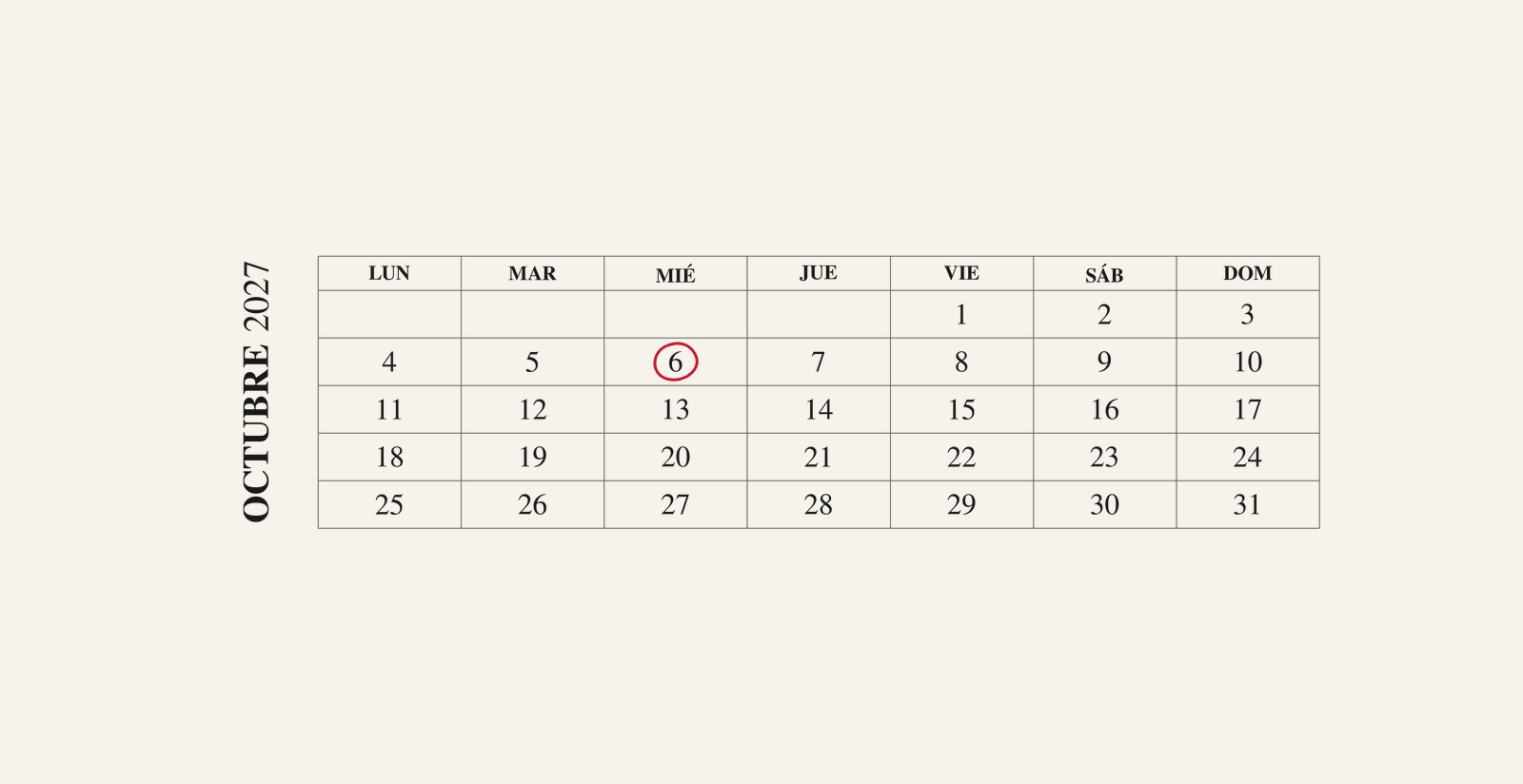
The first milestone in the timetable falls on 6 October 2027. From that date, persons whose turnover, calculated in accordance with the VAT rules, exceeded eight million euros in the previous financial year will be required to issue, send and receive electronic invoices in their transactions with other businesses and professionals. The reference to turnover is linked to article 121 of Law 37/1992, which defines that concept for the purposes of the simplified scheme and other special schemes, and to the information that the AEAT obtains from periodic self-assessment returns and annual returns. Order HAC/1028/2026 specifies the criteria for determining whether the eight-million threshold is exceeded, including the aggregation of the transactions of related entities where appropriate.
The second milestone falls on 6 October 2028. From that date, the obligation to use electronic invoices extends to all other businesses and professionals who, without exceeding the eight-million-euro threshold, are required to issue invoices under article 164.Uno.3 of the VAT Act and the Invoicing Regulation. Electronic invoicing thus becomes the general standard in B2B dealings, regardless of the size of the business, save for specific exceptions for certain special schemes or very small-scale activities that the rules may provide for.
Order HAC/1028/2026 also provides for an additional period until 2029 for certain obligations to report invoice statuses and payments, applicable to individuals and to entities under the income attribution regime which, given their structure and resources, need a longer period of adaptation. These reporting obligations are linked to the invoicing system regulated by Royal Decree 1007/2024 and to the submission of invoicing records to the AEAT, in line with the experience of the Immediate Supply of VAT Information (the SII). The order provides that, for these persons, the obligation to report invoice statuses (issued, sent, received, accepted, paid, etc.) and to provide information on the associated payments will be triggered at a later date within 2029, so that electronic invoicing can be introduced in stages.
3.Identifying the transactions affected and the B2B perimeter
Against this timetable, the first practical decision in preparing the business is to identify the transactions affected. The B2B electronic invoicing obligation concerns dealings between businesses and professionals, within the meaning of article 5 of the VAT Act and of commercial law. It is necessary to determine which customers and suppliers are businesses or professionals, which transactions are carried out with them and which invoicing flows will be affected. In mixed businesses, which deal both with end consumers and with other businesses, electronic invoicing will be mandatory in the B2B segment, whereas in the B2C segment the general invoicing rules will continue to apply, with the option of using electronic invoices but without any specific obligation arising from Law 18/2022.
Identifying the B2B perimeter requires reviewing the database of customers and suppliers, classifying them according to their tax and professional status and analysing the contracts and agreements in force. In certain sectors, such as distribution, construction or professional services, most transactions will be B2B; in others, such as retail, the proportion will be lower. This classification is essential in order to gauge the impact of the obligation and to design the processes for issuing and receiving electronic invoices.
4.Checking the capabilities of the invoicing software and its integration with accounting
The second practical decision is to check the capabilities of the invoicing software. Royal Decree 1007/2024 and Order HAC/1028/2026 lay down technical requirements for invoicing solutions, including the generation of invoices in structured formats, electronic signature, storage and the submission of records to the AEAT. It is necessary to verify whether the invoicing software used by the business meets these requirements, whether it can generate electronic invoices in the required formats and whether it can be integrated with the AEAT's public solution or with private platforms.
Coordination with accounting is equally important. An electronic invoice is not merely a document for collecting payment; it is a record that feeds into the accounts and tax obligations. The processes for issuing, receiving and reporting the status of invoices must be integrated with the accounting system, so that information flows automatically and duplication or errors are avoided. The experience of the SII has shown the importance of such integration in reducing administrative burdens and improving the quality of information.
5.Assessing the public solution and private platforms
The third practical decision is to weigh up whether to use the AEAT's public solution or private platforms. Law 18/2022 and Royal Decree 1007/2024 provide for the authorities to make available to the persons bound a public solution for issuing, sending and receiving electronic invoices, accessible through the AEAT's electronic portal. That solution may be sufficient for smaller businesses or those with simple invoicing flows, but it may prove limited for companies with a high volume of transactions or with specific integration needs.
Private platforms, for their part, offer electronic invoicing management services, integration with ERP and accounting systems, and the reporting of statuses and payments, but they must meet the requirements of interoperability and connection with the public solution. Order HAC/1028/2026 and the associated technical rules lay down standards of format, signature and communication that platforms must observe. Choosing between the public solution and private platforms, or combining the two, calls for an analysis of costs, functionality and risks, and must take into account the business's capacity to manage the technology and information security.
6.Organising the issue, receipt and status reporting of invoices
The fourth practical decision is to organise the internal processes for issuing, receiving and reporting the status of invoices. B2B electronic invoicing is not limited to issuing invoices; it also involves receiving electronic invoices from suppliers and reporting statuses and payments. It is necessary to define who will be responsible for issuing invoices, who will review and approve them, how they will be recorded in the accounts, how statuses will be reported to the AEAT and how discrepancies or incidents will be handled.
The reporting of statuses and payments, provided for in Royal Decree 1007/2024 and implemented by Order HAC/1028/2026, requires the business to report on the status of each invoice: issued, sent, received, accepted, rejected, paid, partly paid, etc. This information is linked to the monitoring of collections and payments and to cash management. Coordination between the invoicing department, accounting and treasury is essential in order to meet these obligations without duplicating work or creating errors.
7.The consequences of leaving preparation until the last minute
Leaving preparation until the last minute can have significant consequences. On the legal side, failure to comply with the obligations to issue, send and receive electronic invoices and to report statuses and payments may give rise to administrative penalties under the “Ley General Tributaria” (the LGT, Spain's General Tax Act) and the specific rules that may be adopted. On the operational side, a lack of preparation may cause problems with customers and suppliers, delays in issuing and receiving invoices, additional manual work to convert invoices into acceptable formats and difficulties in managing statuses and payments properly.
On the financial side, a lack of integration between electronic invoicing, accounting and treasury may affect the monitoring of collections and payments, cash planning and compliance with tax obligations. B2B electronic invoicing is becoming a central element of business management, and its introduction calls for careful planning.
8.From legal obligation to an opportunity for modernisation
Order HAC/1028/2026, implementing Law 18/2022 and Royal Decree 1007/2024, turns B2B electronic invoicing into a phased obligation that takes effect in 2027, 2028 and, for certain reporting obligations, 2029. Beyond formal compliance, the introduction of electronic invoicing offers an opportunity to modernise invoicing, accounting and treasury processes, to improve the traceability of transactions and to reduce errors and administrative burdens. Preparing the business in advance, identifying the transactions affected, checking the capabilities of the software, choosing the right technological solution, organising internal processes, training staff and testing procedures before the mandatory date are essential steps in turning a legal obligation into a competitive advantage and preventing a lack of preparation from resulting in incidents, penalties and additional costs.