Insurance law calls for the contract, the risk insured and the facts that gave rise to the insured event to be understood together. The construction of the policy, the scope of the cover and of the exclusions, the causal link, the assessment of the loss and the position of the insured and that of the injured party, as well as the possible existence of other liable parties or insurers, may wholly determine the strategy in the matter.
We advise and defend insurers, businesses and individuals in disputes arising from the insurance contract and from the liabilities connected with the insured event. We act in claims for refusal of cover or for disagreement over the amount of the compensation, in recovery and subrogation actions, in the defence against claims brought by insurance companies and in direct actions against civil liability insurers.
More than thirty years of experience from the different positions in the conflict allow us to analyse each dispute with a particularly complete understanding of the interests and the foreseeable arguments of all the parties.
Policy, cover, exclusions, clauses limiting the rights of the insured and definition of the risk insured
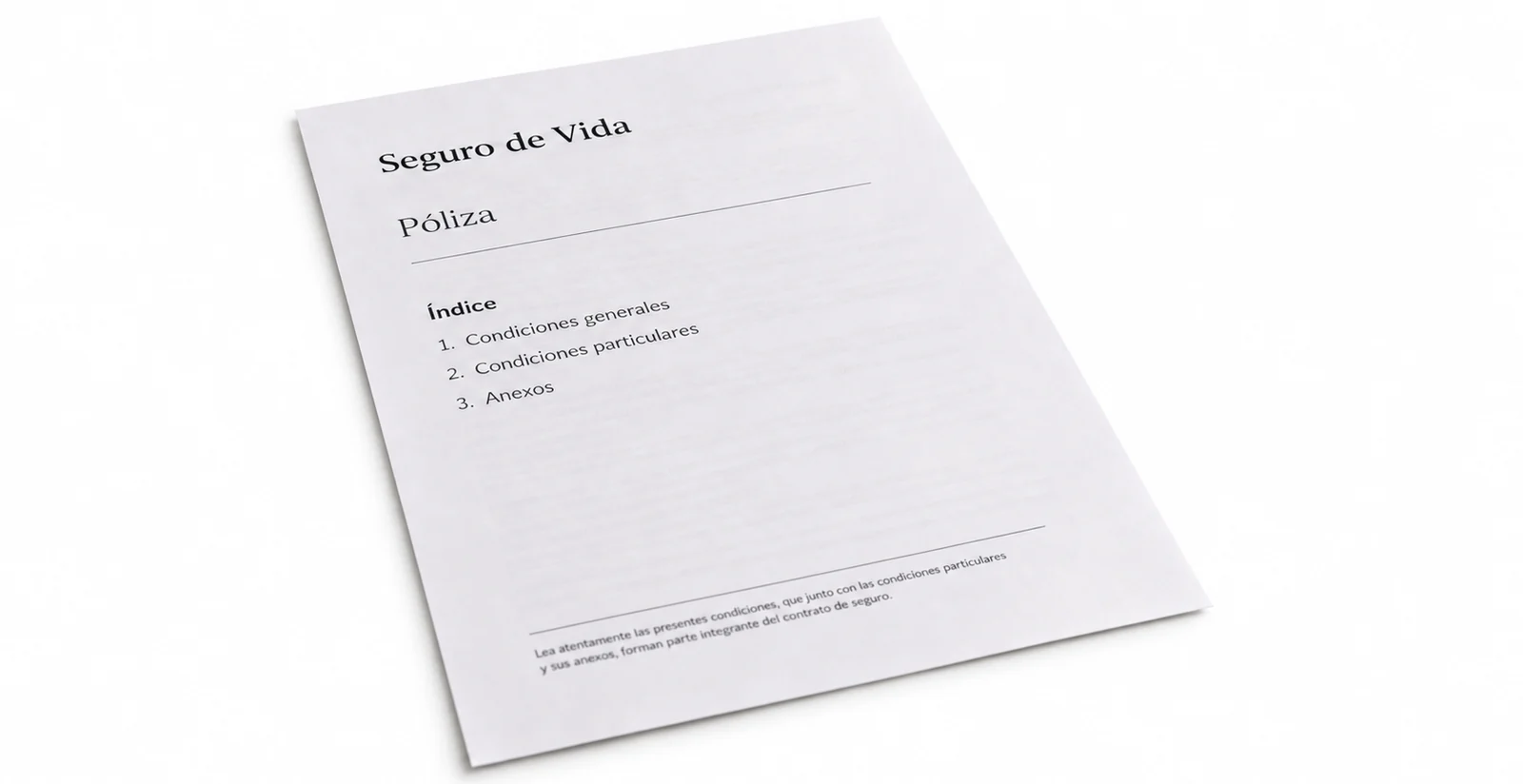
The starting point of any insurance dispute is to determine precisely what risk was insured and what the real scope of the cover is. A policy cannot be analysed by reading one clause in isolation. The general and particular conditions, the covers taken out, the limits in amount and in time, the excesses, the exclusions and the circumstances in which the insured event occurred all have to be examined together.
The “Ley de Contrato de Seguro”, Spain's Insurance Contract Act or LCS, requires the policy to describe the risk and the cover, and requires clauses limiting the rights of the insured to be given specific treatment. Drawing the right distinction between the definition of the risk, exclusions and limitations of cover may be decisive in resolving a dispute. For that reason, before taking a position, we analyse the policy as a whole and relate it to the specific reality of the insured event. It is not enough to determine what the contract says; it is necessary to establish how it must be applied to the facts and what legal consequences it produces for each of the parties.
Defending insurers
Since 1992 we have advised and defended insurers against claims brought by insureds, injured parties and third parties, both out of court and before the courts.
The defence requires it to be determined, first of all, whether the event notified is an insured event that is covered and, if so, what the extent of the insurer's obligation is. We analyse the policy, whether the covers were in force and how far they extended, the exclusions that may be relied on, the limits of cover, the liability attributed to the insured, the causal link and the reality and quantification of the losses claimed.
Where there is a reasonable prospect of reaching a negotiated solution, we assess whether it is advisable from a legal and an economic point of view. Where the conflict requires going to court, we prepare from the outset the evidence and the strategy needed to defend the insurer's position.
The insurer's recovery against the liable third party
Once it has paid the indemnity for an insured event, the insurer may have standing to claim the sums paid from the liable third party. Subrogation allows it, within the limits set by law, to exercise against the party liable the rights and actions that belonged to the insured.
Insurers usually handle numerous recoveries, which calls for a volume legal case management system in which scale does not dilute quality. From the volume case management and processes department of our Barcelona office, we combine legal knowledge, organisation and technology applied to the law in order to handle large volumes of claims and court proceedings efficiently, maintaining traceability, rigour and control in every case file. Technology allows us to optimise processes and handle volume; legal knowledge and professional oversight ensure that every step taken follows uniform criteria and a previously defined strategy.
The result is a scalable and responsive service, subject to high standards of responsibility, oversight and legal quality.
Claims by the insured against their own insurer
We also defend businesses and individuals where it is their own insurer that refuses, wholly or in part, to cover an insured event or disagrees with the amount of the compensation. The refusal may be based on very different grounds, such as those relating to the construction of the risk insured, the application of an exclusion, the limits of the policy, the declaration of the risk, the origin of the loss or the quantification of its consequences.
In these matters we review the policy and all the contractual documentation, reconstruct the circumstances of the insured event and analyse the specific ground on which the insurer relies in refusing to meet the claim. Where the dispute has a technical or economic dimension, we coordinate the expert evidence needed to establish the cause and the extent of the loss.
Our aim is to check whether the refusal or the limitation of cover is genuinely founded on the contract and on the applicable rules. Where it is not, we claim full performance of the insured benefit and whatever consequences follow in law. The claim is first put forward on the basis of a full assessment of the documentation and of the prospects of an out-of-court solution. If the insurer maintains a position that we consider legally unjustified, we take on the defence of the insured before the courts.
Direct action, civil liability and litigation
In civil liability insurance, the relationship between the injured party, the insured and the insurer introduces a further dimension. The LCS confers on the injured party a direct action against the insurer and lays down a specific regime governing the defences that the insurer may raise against the injured party. That autonomy of the direct action calls for a careful distinction between the questions relating to the liability of the insured and those that belong properly to the insurance relationship.
We bring direct actions against insurers on behalf of those who have suffered the loss and, from the opposite position, we defend insurers against the relief sought by injured parties. These proceedings usually call for a very precise analysis of causation, the technical and expert evidence, the quantification of the loss, the identification of all those liable and the possible concurrence of several insurance policies. The strategy has to address all of this together, from before the proceedings are commenced.
Our experience in litigation allows us to prepare these matters from their earliest stage with a procedural view of the evidence, the defences, the quantification of the loss and the position of each participant, both in negotiation and before the courts. Having acted from different positions is a particularly significant advantage here. Because we have defended insurers, insureds, companies facing claims and injured parties, we know how each party builds its arguments and we can anticipate the questions that are likely to become the centre of the conflict.